
First off, it is important to know the types of schools, and the ages that students will attend them. Here’s a quick breakdown:
- Nursery/ Daycare (Asilo nido): 0-3 years
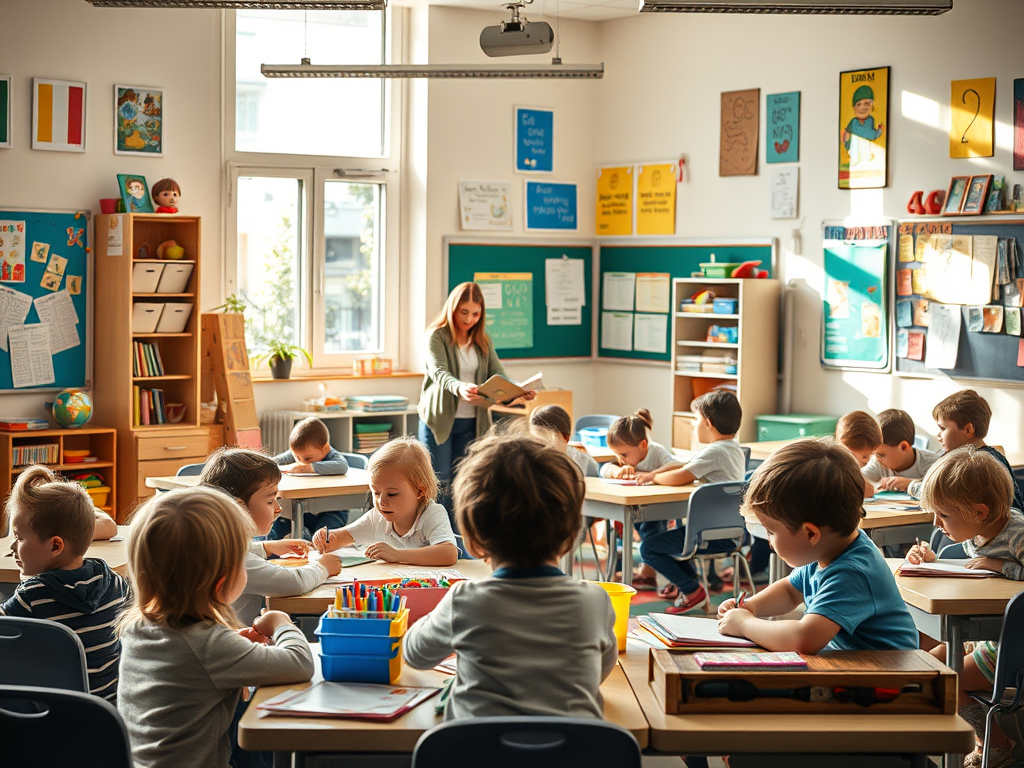
- Preschool/ Kindergarden (Scuola materna) 3-6 years
Until the age of 6, children in Italy are not obliged to attend formal schooling, however every child between the age of 3-5 is entitled to a place at a scuola materna or preschool. With the exception of private establishments, preschool in Italy is free. Any children turning 3 before the 31st December of any given academic year can enrol at preschool.
- Primary/ elementary school (Scuola primaria/ elementare) 5.5-11 years (total 5 years)
In the past, children began primary school from age 6, but recent changes in legislation now mean that children can begin from age 5.5. This was changed to bring the school leaving age in Italy, in line with the rest of Europe. Enrolment for primary school can be done online and generally; registration dates are released in November.
Children will cover a range of topics including: Mathematics, Italian, English, Geography, Music, Religion, Social studies, Science and Information technology/ computer sciences.
- Middle/ lower secondary/ junior high (Scuola media) 11-14 years
Scuola media is compulsory for all students in Italy. Here a national curriculum will be followed which is mandated by the Ministero della Pubblica Istruzione or MPI (Ministry of Public Education). Students are required to attend a minimum of 30 hours per week and in some cases up to 40. This will vary school to school, depending on demand for additional classes. The additional ‘afternoon’ classes usually include things like foreign language study, IT, sport and other extracurricular activities, and generally they are funded from the school budget, with the exception of the purchase of musical instruments – this is a parental responsibility.
- Upper secondary/ Senior high (Scuola superiore) 15+
There are two kinds of upper secondary school in Italy – Istituto and Liceo. Istituto is similar to a college in that it generally offers more vocational study, whereas a Liceo is similar to a grammar school, and generally has a more academic approach. Students can choose which kind of school they’d like to attend based on their interests and future educational and professional plans – just like in the UK and many other countries, that’s a lot for a young adolescent to decide!
To confuse matters further, high school in Italy is broken down into two sections – Biennio and Triennio. Essentially, the first two years are compulsory. Here teenagers will be taught general studies, similar to those taught in primary and middle schools, but at a higher level. After this point, if they no longer want to attend school and prefer to head out into the world of work, they can.
For those who wish to further their education, the Italian education system offers the Triennio – three more years of specialised study in a range of categories, depending on the interest(s) of the student. It is during the Triennio period that specialised subjects are taught, these are called ‘Indirizzi’.
On completing (to a satisfactory level or more) 5 years of upper secondary school, students will receive their diploma and graduate high school. In order to receive a diploma, students must complete and pass both written and oral examinations. There are three written exams on a range of topics, one of which is a dissertation on the student’s chosen area of specialism. The oral exam comes after the written exams and is more of a discussion with the student about what they have learned during their time at high school. Graduation called ‘la laurea’ is a very special occasion and cause for celebration, more than it is in the UK. At this point, any student wishing to continue their education at university can do so, provided that they have been awarded their diploma – the diploma is an entrance requirement to university, although some universities may have varying acceptance guidelines, so it’s worth a check with individual providers.
| Asilo | Nursery |
| Scuola materna/ Primina | Preschool/Reception/ Kindergarden |
| Scuola primaria/ scuola elementare | Primary school |
| Scuola media | Middle school/ Junior high school |
| Scuola superiore | High school/ Senior high |
| Liceo | Like a British grammar school – offers more academic subjects |
| Istituto | Like a college – offers vocational study |
| Diploma di maturità | Graduation certificate |
| Indirizzi | Specialised courses |
| Ministero della Pubblica Istruzione (MPI) | Ministry of Public Education |
| Rappresentante di classe | Class representative (a parent) |
| Mensa | School dinner service |
| Quaderni/ libri | Exercise books/ text books |
| Astuccio/ Zaino | Pencil case/ Backpack |
| Divisa/ Grembiule | Uniform/ Apron |
Depending on where you are coming from, and what the school system is like where you’re from, you may find lots of differences. If you are from the UK, the best reference I can give based on OUR experience is that school here is similar to how it was in the 90s and 00s in England. For example, most homework and school work is still pen and paper (which for the record, I prefer!), there are lots of repetition based exercises like times tables etc too. Overall though, they cover a good range of topics and they seem to do an appropriate amount of ‘work’ for their ages.
Another difference we have experienced is that the children are not required to wear a uniform, and instead attend school in comfortable, weather appropriate outfits. In some primary schools, children are required to wear an apron of sorts which will be specific to their age group and can be bought in local stores. Apart from this, each child should have a pair of wellies, waterproof jacket and trousers or a puddle suit, small children need non slip socks, all kids need to take a change of clothes just in case, and a spare set of trainers for PE.
We will share more as we go along as we are still learning lots about how it works, but for now we hope this has been helpful for you!
“Tell me and I forget, teach me and I may remember, involve me and I learn.” — Benjamin Franklin
 Gopopolo Travel
Leave a comment